Can small states govern AI while depending on global suppliers?
- Posted on Nov 13, 2026
- by Nanda Lakhwani

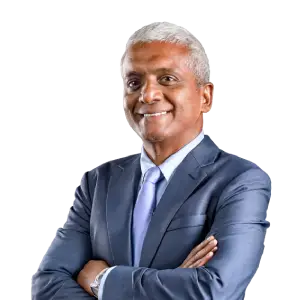
Small states adopting artificial intelligence (AI) must retain authority over its use even when they depend on foreign technology, Prosecutor General Abbas Shareef argued at the World AI Regulation Summit, hosted by TAB Global in London on 5 November 2026. For the Maldives’ prosecution service, that means protecting case data, testing tools in Dhivehi, the country’s national language, and keeping prosecution decisions with qualified prosecutors.
Shareef acknowledged that the Maldives would obtain some technology from abroad rather than train a frontier model domestically. His office’s approach is to establish what it will require before buying AI systems and which terms it will refuse. It has limited influence over global suppliers, owing to the size of its market. Maldives Monetary Authority statistics put the country’s projected mid-year population at about 581,000 in 2025 and nominal GDP that year at $7.74 billion.
His presentation preceded the panel “Sovereignty on Their Own Terms: How Governments Buy, Build and Govern AI”. During the panel, Jon Truby, UNESCO Chair on Artificial Intelligence Law and Sustainability at the Centre for International Law, National University of Singapore, cautioned that developing domestic technology does not automatically deliver sovereignty, because dependencies remain in chips, software and infrastructure. Bojana Bellamy, President of the Centre for Information Policy Leadership, warned that duplicating infrastructure and restricting cross-border data flows could carry economic costs.
For Shareef’s office, setting conditions also creates an obligation to check that suppliers meet them. His proposals to share contract clauses and technical evaluations across justice institutions address the cost of doing so: small buyers should not each have to assemble the same legal and testing expertise before they can adopt AI.
Setting conditions before deployment
The Maldives’ Prosecutor General’s Office established its AI Governance Framework and AI Governance Policy under PGO 2.0, its AI strategy and delivery programme. These internal rules govern the office’s own use of AI. Shareef said no national AI law was yet in place; the separate Data Protection Bill remained before Parliament.
Staff could already access publicly available generative AI tools before the office had established guidance on their use. An internal assessment conducted in May put willingness to adopt AI at 81 out of 100, against 52 for confidence in guidance on responsible use, Shareef reported.
The policy prohibits automated decisions to charge, prosecute or discontinue proceedings, and placing case information in public AI tools. Applications touching evidence, disclosure or court submissions require assessment, review by the office’s AI governance committee and Shareef’s written approval. Approval to use a tool must be renewed, and prosecutors remain responsible for checking AI-assisted work.
Shareef described close to a year of preparation before deployment. “That year produced rules, not software.” As of 5 November, no AI tool had entered live prosecution work in his office, Shareef said, leaving the safeguards untested in live casework.
A direction issued on 4 November also required investigating bodies submitting files to disclose whether and how AI had been used, with original exhibits preserved where AI had touched the material, Shareef said. He distinguished that requirement from directing how other bodies investigate.
Those restrictions also shape purchasing decisions. Data ownership and sovereignty are conditions a bid must satisfy, regardless of price.
“A small buyer cannot rewrite a global vendor’s standard terms. What it can do is decide before it buys what it will not sign without,” Shareef said.
He also stressed his willingness to refuse unsuitable terms: “A small state has no market power. It has the willingness to walk away.”
Making local-language performance a requirement
A system designed for a larger market may need adaptation before a small public institution can use it reliably.
During the subsequent panel discussion, Shareef described work with Maldivian companies on Dhivehi tools for potential use in his office. Local development could address language requirements while retaining dependencies on foreign models, software or hardware.
AI translation tools on social media sometimes misidentified Dhivehi and produced results that made little sense to Maldivian readers, he recounted.
“A tool that is accurate in English and guesses in Dhivehi is not accurate for us,” he stressed.
Treating Dhivehi as a feature to add later, Shareef argued, risked leaving it unsupported indefinitely. His office required tools to be tested on its own work in its own language before entering live casework.
Control must extend beyond infrastructure
Domestic ownership can reduce some dependencies while leaving others intact. Truby cautioned against treating nationally owned technology as sufficient evidence of sovereignty.
“Just creating your own technology doesn’t automatically create sovereignty for your country as well,” he said.
He framed sovereignty as “meaningful control”, encompassing choices about rules, data, infrastructure and institutional expertise. Governments need to consider where chips come from and where they are built. A data centre used only domestically also leaves its operator exposed to national electricity prices.
Bellamy stressed the benefits smaller economies could lose if sovereignty restricts access to technology. Research, cybersecurity and financial crime prevention also depend on cross-border data flows.
“At some point we are really going to hurt the economy itself if we start replicating things and keeping things from others,” she said, calling for consideration of “digital solidarity and digital sovereignty”.
For smaller states, these arguments point towards choosing which dependencies to accept and which controls to retain. Access to global models and infrastructure can coexist with local authority over sensitive data, performance requirements and deployment decisions, provided institutions have the expertise to enforce those conditions.
Owning a server does not change what a model learned or remove its blind spots, Shareef argued in his presentation. His office requires control of case data and the keys protecting it, as well as the capacity to determine which tools may be used.
Control must also survive the initial purchase. International governance approaches, Shareef argued, “say a great deal about how a system must behave and very little about how to leave it”. Exit terms govern what happens when the prosecution service needs to change suppliers after staff have come to rely on a system.
A United Nations Development Programme (UNDP) July 2026 report Small States, Big Signals identifies a related imbalance across eleven countries and territories: governments remain accountable for outcomes while vendors often control AI system behaviour, updates and performance trade-offs. It argues that procurement requirements for disclosure, performance, auditability and exit can give governments leverage before systems are deployed at scale.
Sharing procurement and assessment work
Shareef proposed common contract clauses for public buyers and the reuse of technical evaluations across justice institutions. Both would reduce work that small institutions otherwise have to repeat before approving an AI system.
Clauses covering data ownership, keys, exit and renewal should not have to be drafted again by each government, including those with “only one procurement officer”, he argued. Published model terms would allow public buyers to adopt those protections by reference.
Testing creates a separate demand for expertise. International governance approaches assume access to assessors and laboratories that smaller jurisdictions may lack, Shareef argued. Referring to the summit’s forthcoming discussion on AI assurance, he questioned whether the market for testing and assessment would serve buyers of his office’s size.
Where one justice institution has properly evaluated a tool, others should be able to rely on that evaluation and add only what is local, he proposed. Providers should also disclose evidence of performance in the buyer’s language before selling to a court or prosecution service.
Shareef said the Maldives had pledged at the UN Crime Congress in Abu Dhabi in September to share its governance framework, policy instruments and training curriculum at no cost, and renewed the offer to delegates.
Smaller governments will remain dependent on global suppliers for models, chips and software. They can nevertheless set conditions for access to sensitive data, require evidence of local-language performance, retain authority over deployment and secure workable exit terms. The capabilities to prioritise are procurement expertise, technical assessment and staff able to scrutinise AI-assisted work, supported by shared resources where local capacity is limited. For the Maldives’ prosecution service, the test is whether those capabilities can turn its written safeguards into effective control when tools enter live casework.